
HEPA Filtration
A properly sized HEPA air cleaner can reduce airborne particles. It does not remove allergens already settled on fabrics and furniture.
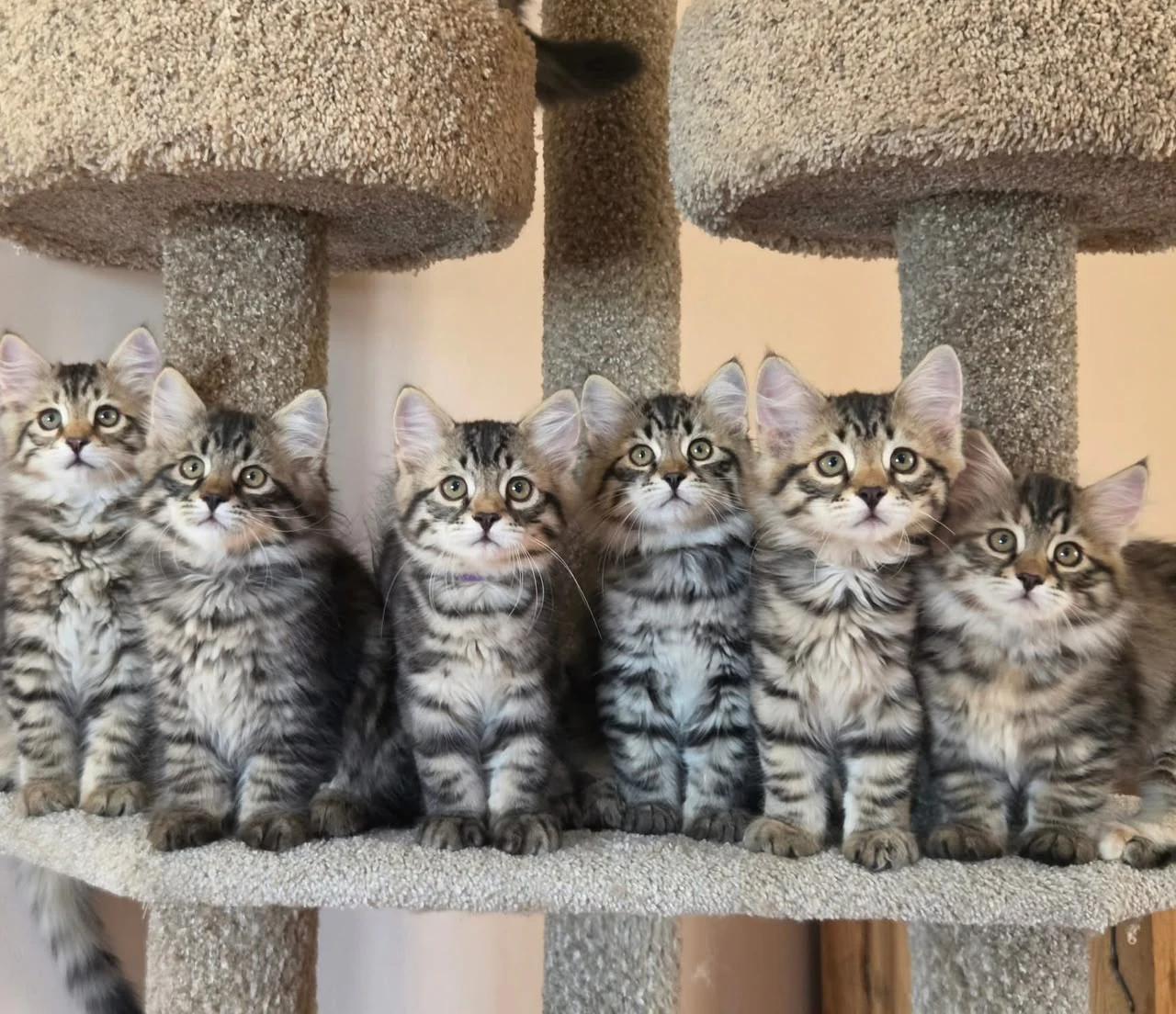
Are Siberian Cats Hypoallergenic?
Understanding Fel d 1, individual reactions, and what allergy-sensitive families should consider before adopting.
Ask Us a QuestionSiberians are admired for their full coats, affectionate personalities, and intelligence. Their reputation as a lower-allergen breed also interests families who have experienced sneezing, itchy eyes, or other symptoms around cats.
The possibility of welcoming a Siberian can be exciting, but no kitten or adult cat can be guaranteed to prevent allergic reactions. This guide explains cat allergens, the limits of breed-related claims, and the questions to consider before adopting.
Siberians are not completely hypoallergenic. Some people with cat allergies report tolerating individual Siberians better than other cats, but that experience cannot predict how someone else will react.
The word hypoallergenic can suggest a level of reassurance that no cat breed can offer. All cats produce allergens, and evidence has not established any breed as reliably allergy-safe.
Siberians may be better tolerated by some individuals, but they are not an allergy-free breed.
Further reading: American College of Allergy, Asthma & Immunology: Pet Allergies.
Cat allergies usually involve proteins produced by the cat, rather than the hair itself. Proteins in saliva and skin secretions spread onto the coat and into the home. A sensitive person’s immune system reacts to these proteins, causing symptoms.
Fel d 1 is a major cat allergen, associated with saliva and skin glands. Grooming spreads it across the coat. Allergen-containing particles can then become airborne or settle on clothing, furniture, and bedding.
These particles can travel on belongings and remain in indoor spaces, which helps explain why direct contact with a cat is not always needed to trigger a reaction. Cats also produce other allergenic proteins.
Hair can carry allergens, skin flakes, pollen, and dust, but hair length does not reliably indicate how someone will react. Both long-haired and short-haired cats can trigger symptoms. A Siberian’s triple coat neither guarantees more allergies nor protects against them.
Dander is made up of tiny shed skin particles that can carry allergenic proteins. These particles circulate in air and collect on surfaces. Cleaning can reduce accumulation, but cannot make a home completely free of cat allergens.
The reputation is largely linked to claims about Fel d 1. Limited research and observations have prompted interest in whether some Siberians produce less of this protein. The evidence does not establish that Siberians consistently produce less than other breeds or are suitable for everyone with cat allergies.
Levels vary considerably between individual cats. A lower measurement for one cat does not tell us how a different cat—or a different person—will respond. Other cat allergens may also cause symptoms.
No. A purebred pedigree does not guarantee low allergen production. Littermates may differ, and two people may react differently to the same kitten. Another family’s positive experience is encouraging, but it is not a prediction for your household.
There is no dependable basis for choosing coat color as a way to avoid allergies. Brown tabby, silver, golden, blue, cream, white, and pointed Siberians can all produce allergens. Choose a color because you like it, rather than as an allergy safeguard.
Reactions to Siberians can resemble reactions to any other cat. Symptoms may appear soon after contact or become persistent with continued exposure.
Severity depends on the person and the exposure. Anyone with asthma or a history of substantial reactions should speak with an allergist before considering a cat. Breathing difficulty should not be treated as a normal adjustment to a new pet; seek urgent medical help for severe or worsening breathing problems.
Some people with cat allergies live comfortably with Siberians; others continue to have symptoms. Your sensitivity, asthma status, home environment, and the individual cat all matter.
An allergist can help identify your triggers and discuss whether exposure-reduction measures and treatment are appropriate. Mild symptoms today do not guarantee that ongoing exposure will stay comfortable.
If symptoms are persistent, or asthma is involved, obtain individualized medical advice before adopting. Repeated exposure should never be assumed to make an allergy disappear.
Discuss suspected cat allergies, allergic rhinitis, eczema, or asthma with your child’s healthcare professional before introducing a kitten. Consider everyone who shares the home, even if only one family member is currently experiencing symptoms.
A specialist can review your history and symptoms and decide whether skin-prick testing or blood tests for allergen-specific IgE would help. Test results need to be interpreted alongside your medical history; they do not certify a kitten as safe.
Reactions around cats may involve multiple animal proteins, or environmental allergens such as dust and pollen carried in the coat. Identifying the triggers helps you make a more informed decision.
If your allergist considers it appropriate, planned contact may give you information about immediate reactions. A short visit cannot predict long-term tolerance: exposure and allergen accumulation at home can be very different.
At our cattery, visits can be scheduled once a reservation is confirmed. Please discuss allergy concerns and review the written terms with us before making a commitment.
Talk through any history of allergies or asthma with everyone who will live with the kitten. Make a plan that considers the family’s health and the cat’s long-term welfare.
For people already living with a cat, an allergist may suggest combining environmental changes with treatment. These measures may reduce exposure; they cannot guarantee symptom relief or make cat ownership appropriate for everyone.
A properly sized HEPA air cleaner can reduce airborne particles. It does not remove allergens already settled on fabrics and furniture.
Use a vacuum with effective filtration, damp-dust surfaces, and wash bedding and washable throws. Easily cleaned furnishings can make the routine simpler.
Keeping cats out of bedrooms can reduce direct exposure there. Allergens can still enter on clothing and through household air.
Wash your hands after handling a cat and avoid touching your eyes or face before washing.
Regular brushing helps maintain a Siberian’s coat and remove loose hair, but does not stop allergen production. If possible, a household member without allergies can take care of grooming.
Depending on your symptoms and medical history, a clinician may discuss allergy medicines, asthma treatment, or allergen immunotherapy. Treatment should be tailored to you rather than chosen on a breeder’s advice.
Management guidance: American Academy of Allergy, Asthma & Immunology: Pet Allergy.
Bathing may temporarily reduce some allergens on the coat, but the cat continues producing them. It is not a permanent solution or a way to guarantee safety for someone with severe allergies.
Frequent bathing may be stressful and may not suit your cat’s skin or coat. Discuss an appropriate grooming routine with your veterinarian and keep the cat’s comfort in mind. Our Kitten Care Guide covers everyday coat care.
Kittens also produce allergens. Their production and your level of exposure can change as they grow. Tolerating a young kitten does not guarantee the same response when the cat is older.
Siberians mature slowly, often developing physically over several years. A decision to adopt should account for the adult cat and a lifetime together.
Some research has explored differences in Fel d 1 associated with sex and reproductive status, but these traits do not offer a dependable way to select an allergy-safe cat. Individual variation and a person’s sensitivity remain important.
Do not assume that a female kitten or a neutered male will prevent symptoms.
Balinese, Russian Blues, Devon Rexes, Sphynxes, and Siberians are often promoted as hypoallergenic. No breed is universally safe for people with cat allergies.
Hairlessness does not eliminate allergen production, and a short coat does not necessarily mean less exposure. Likewise, a Siberian’s long coat alone does not establish that it will cause a stronger reaction than a short-haired cat.
The individual cat, your immune response, and the home environment matter more than a marketing label.
Take time before committing. A kitten needs a stable home, and your family needs realistic expectations about living with a cat.
Our Siberian Cat Breed Guide introduces the breed, and our Adoption Process explains how applications and reservations work.
We want families to enjoy sharing their lives with Siberians, with a clear understanding of what the breed can—and cannot—offer. We do not promise allergy-free kittens or guarantee how anyone will react.
Please tell us about allergy concerns early, ask questions, and obtain medical advice where needed. Our role is to explain our kittens and adoption arrangements honestly, so you can consider both your household’s wellbeing and the kitten’s future.
For more information, explore our available Siberian kittens, kitten care guide, and adoption process, or contact our Texas cattery.
No. All cats produce allergens, including Siberians. No cat can be guaranteed to prevent allergic reactions.
Some individuals may have lower measured levels, but evidence does not establish that every Siberian produces less than other breeds. A measurement cannot predict a person’s reaction.
Some people tolerate individual Siberians; others react. Speak with an allergist before adopting if allergies are a concern.
Yes. Cat allergens can trigger or worsen asthma in sensitive people. Obtain medical advice before bringing a cat into a household affected by allergic asthma.
There is insufficient evidence to promise that a Siberian will be better tolerated than a Maine Coon or another breed. Individual reactions vary.
Hair length alone does not predict reactions. Allergenic proteins can spread through saliva, skin particles, fur, and the home environment.
Sex and reproductive status cannot reliably tell you whether an individual cat will trigger symptoms. Choosing a female is not an allergy safeguard.
Yes. Allergies can develop or change. Initially tolerating a cat does not guarantee that symptoms will never appear.
HEPA filtration may reduce airborne allergen-containing particles. It cannot remove every source of exposure or guarantee symptom relief.
No single test can certify that a kitten is allergy-safe for everyone. Allergen measurements cannot guarantee how a person will react.
Allergen immunotherapy may be suitable for some patients. An allergist can explain the benefits, limitations, and whether it is appropriate for you.
Possibly. Discuss the decision with a healthcare professional and consider individual sensitivity, asthma, household circumstances, and the kitten’s long-term welfare.
Get to know the breed, meet our kittens, and ask us about the adoption process. We are happy to help you take your time with the decision.