
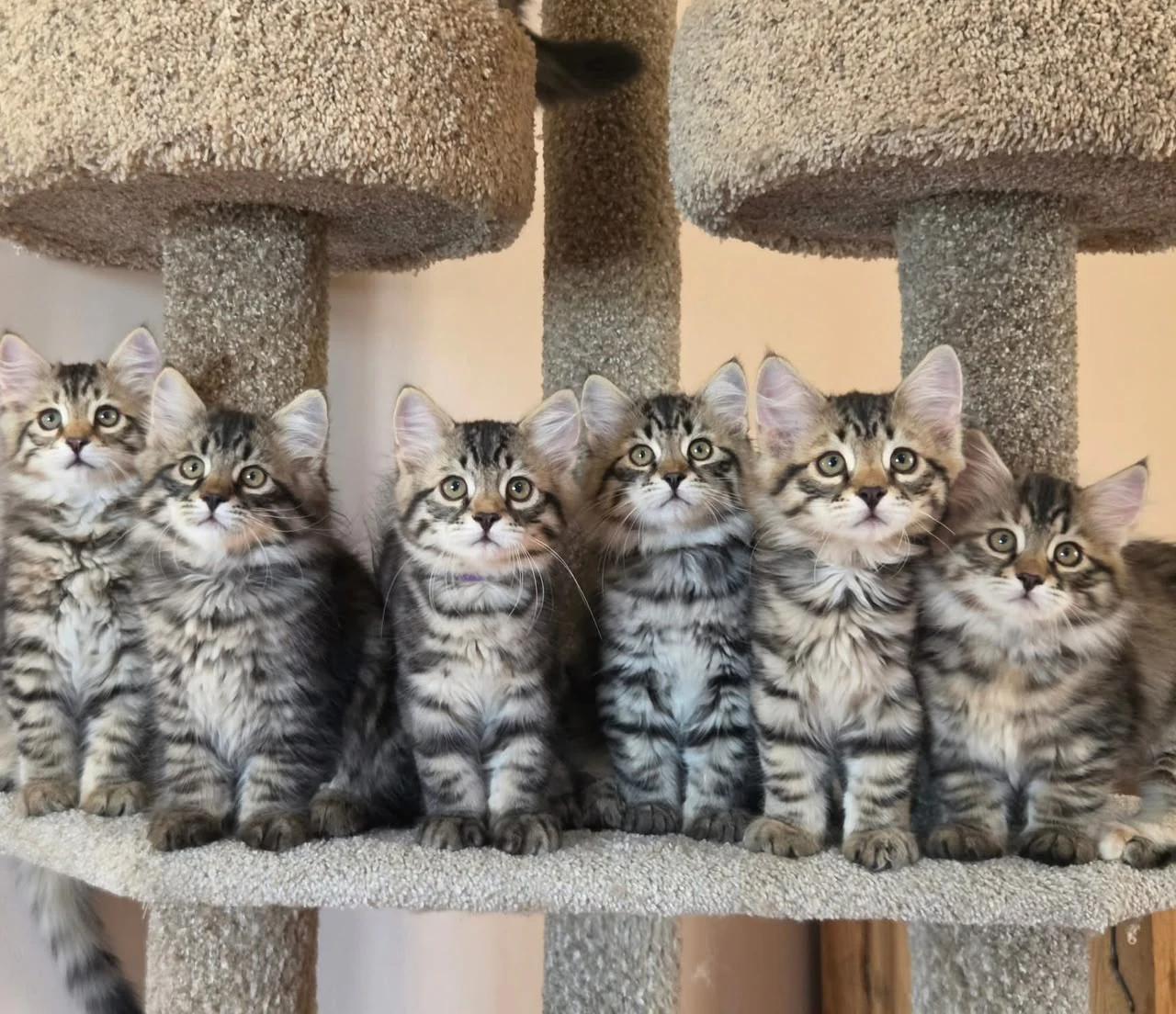
Siberian Kitten Health & 12-Month Guarantee
Our Proposed 12-Month Health Guarantee
Veterinary care, health records, and clear written terms for your kitten’s homecoming.
Meet Our Available KittensSiberian Kitten Health & 12-Month Health Guarantee
Healthy beginnings. Thoughtful breeding. A lifetime of companionship.
Welcoming a Siberian kitten into your family is a meaningful decision, and understanding your kitten's health is an essential part of that journey.
At our Texas Siberian cattery, we believe prospective families deserve clear information about responsible breeding practices, kitten wellness, preventive veterinary care, and the health protections provided through a written adoption agreement.
Siberian cats are admired for their natural strength, affectionate personalities, and impressive appearance. Although they are generally considered a healthy breed, every cat deserves careful monitoring, appropriate medical attention, and a supportive environment throughout its life.
Our proposed 12-month kitten health guarantee is designed to provide defined protection against qualifying serious congenital and hereditary conditions diagnosed during the first year after your kitten joins your family.
This page explains our approach to kitten health, the importance of veterinary examinations, genetic screening considerations, and what families should know about the guarantee.
What Your Kitten Goes Home With
Our kittens go home at 13 weeks, with age-appropriate vaccinations, FIV/FeLV testing, a microchip, spay/neuter completed, veterinary records, a written health guarantee, and a starter kit. We arrange monthly veterinary checks and a veterinary visit before placement.
The sections below explain preventive care and the proposed 12-month coverage. Review the complete written agreement with us before reserving.
Our Commitment to Siberian Kitten Health
A Thoughtful Beginning Makes a Meaningful Difference
A kitten's early environment can influence its development, confidence, socialization, and general wellbeing.
We believe responsible kitten raising should focus on more than appearance or pedigree. It should also consider physical health, emotional development, appropriate nutrition, veterinary guidance, and the kitten's readiness to transition into a permanent home.
Our health philosophy is centered on five important principles:
Responsible breeding decisions
Thoughtful breeding considers the health, temperament, medical history, and suitability of breeding cats.
Preventive veterinary care
Routine examinations, age-appropriate vaccinations, and veterinary guidance support healthy kitten development.
Awareness of hereditary conditions
Understanding breed-associated health risks helps breeders and owners make more informed decisions.
A clean, supportive environment
Proper hygiene, nutrition, social interaction, and opportunities for safe play contribute to kitten wellbeing.
Clear communication with families
Prospective owners should understand their kitten's health records, ongoing care requirements, and the terms of any written guarantee.
We believe these principles create a stronger foundation for responsible Siberian kitten ownership.
Veterinary Examinations & Kitten Wellness
Understanding Your Kitten's Health Before Homecoming
Veterinary examinations are an important part of responsible kitten care.
A veterinarian can assess a kitten's general condition, growth, hydration, heart and lung sounds, eyes, ears, mouth, skin, and other aspects of physical development.
These examinations can help identify visible or detectable health concerns, although no single examination can rule out every inherited or developing condition.
What Does a Siberian Kitten Veterinary Examination Include?
Depending on the kitten's age and veterinary recommendations, a routine examination may include:
- General physical assessment and body condition.
- Heart and lung auscultation.
- Eye, ear, mouth, and dental development checks.
- Skin and coat examination.
- Assessment of movement and mobility.
- Weight and growth monitoring.
- Review of vaccination and parasite-prevention history.
- Recommendations for additional testing or follow-up care.
Families should receive accurate information about examinations actually completed for their kitten.
A veterinary health examination is valuable, but it is not a guarantee that a cat will never develop a medical condition.
Siberian Kitten Vaccinations & Preventive Care
Building Protection During Early Development
Vaccinations are an important part of preventive feline healthcare.
Young kittens are especially vulnerable to certain infectious diseases because their immune systems are still developing.
A veterinarian will recommend a vaccination schedule based on the kitten's age, health, environment, and applicable regulations.
Core Vaccinations for Siberian Kittens
The feline viral rhinotracheitis, calicivirus, and panleukopenia combination vaccine, commonly called FVRCP, is a core part of kitten vaccination programs.
It helps protect against:
Feline viral rhinotracheitis: A respiratory disease associated with feline herpesvirus.
Feline calicivirus: A contagious viral infection that can cause respiratory and oral symptoms.
Feline panleukopenia: A serious viral disease that can be particularly dangerous for young kittens.
Rabies vaccination is also an important consideration, with timing determined by veterinary recommendations, vaccine labeling, and applicable Texas requirements.
Other vaccines, including feline leukemia virus (FeLV), may be recommended based on age and risk factors.
Will My Siberian Kitten Need Additional Vaccinations?
Yes, kittens commonly require a series of vaccinations, and some doses may remain due after homecoming.
Your veterinarian should review the kitten's existing records and recommend the appropriate continuation schedule.
A responsible breeder should never describe a kitten as fully vaccinated unless that statement accurately reflects its age, medical records, and applicable veterinary guidance.
Veterinary reference: AAHA/AAFP feline vaccination guidance.
Parasite Prevention & General Health Screening
Intestinal parasites and other common feline health concerns can affect kittens regardless of breed.
Veterinarians may recommend fecal examinations, deworming, and other preventive measures based on individual risk.
Why Is Parasite Prevention Important?
Young kittens can be affected by intestinal parasites that interfere with normal growth, digestion, and overall wellbeing.
Common concerns may include roundworms, hookworms, and certain protozoal infections.
Preventive care should follow veterinary recommendations rather than an assumed one-size-fits-all schedule.
FIV and FeLV Testing
Feline immunodeficiency virus (FIV) and feline leukemia virus (FeLV) are important infectious diseases to understand when evaluating feline health.
Testing may be recommended based on the cats' backgrounds, exposure risks, breeding program, and veterinary guidance.
Prospective owners should ask whether testing was performed on the kitten, its parents, or other relevant cats, and request clarification about the results.
Testing histories should be documented accurately rather than represented as universal guarantees against future infection.
Siberian Cat Genetic Health & Hereditary Conditions
Understanding Genetic Health in Siberian Cats
The Siberian is a naturally developed breed known for its strength and substantial physique.
However, natural development does not make any cat breed immune to inherited disease.
Responsible breeding involves understanding known health concerns, reviewing family histories, and discussing appropriate screening with veterinary professionals.
Genetic testing can identify certain known disease-associated variants, but it cannot predict every possible inherited condition.
Hypertrophic Cardiomyopathy (HCM) in Siberian Cats
Hypertrophic cardiomyopathy, or HCM, is a heart condition characterized by abnormal thickening of the heart muscle.
It is one of the important health conditions prospective Siberian owners should understand.
HCM can affect the heart's ability to function normally and may occur without obvious early symptoms.
Possible signs in affected cats can include difficulty breathing, reduced activity, weakness, or other serious complications.
Some cats remain without noticeable symptoms for extended periods.
How Is HCM Screened?
A veterinary echocardiogram, which uses ultrasound to examine the heart, is an important diagnostic and screening tool.
Breeding cats may undergo cardiac screening according to veterinary recommendations and their individual health histories.
It is important to understand that:
- A normal echocardiogram reflects the heart's condition at the time of examination.
- A cat can develop HCM after a previously normal result.
- Not all forms of HCM can be ruled out through currently available genetic tests.
- Screening reduces uncertainty but cannot guarantee that future disease will never occur.
Prospective families should ask what screening has actually been performed on the kitten's parents and whether supporting documentation is available.
Other Genetic Health Considerations
Depending on ancestry and veterinary recommendations, breeders may also consider screening for certain inherited metabolic, renal, or other conditions.
DNA panels can be useful tools when tests are scientifically relevant to the breed and the breeding cats' backgrounds.
However, a broad genetic testing panel should not be presented as proof that a cat is free of every possible hereditary disease.
Our position is simple: transparent records and responsible veterinary guidance are more meaningful than unsupported claims of perfect genetic health.
Further reading: Cornell Feline Health Center: Hypertrophic Cardiomyopathy.
The Importance of Healthy Siberian Breeding Cats
Healthy Parents Are an Important Part of Responsible Breeding
The health and wellbeing of breeding cats are central to a thoughtful breeding program.
Appropriate care includes maintaining healthy body condition, providing balanced nutrition, reviewing medical histories, and addressing veterinary concerns before breeding.
A responsible program should also consider temperament, genetic diversity, and the long-term wellbeing of both parents and offspring.
Questions Families Should Ask About the Parents
When researching Siberian breeders, it is reasonable to ask:
- Have the parents received routine veterinary care?
- Has relevant cardiac screening been performed?
- Are genetic testing results available, where applicable?
- Have there been known hereditary conditions in the family history?
- How are breeding cats housed, exercised, and socialized?
- What steps are taken when a potential health concern is identified?
These questions help prospective families understand the breeding program without assuming that any particular test can guarantee perfect health.
Our 12-Month Siberian Kitten Health Guarantee
Clear Protection. Written Terms. Responsible Support.
Our proposed 12-month health guarantee is intended to provide families with clearly defined protection if a qualifying serious congenital or hereditary condition is diagnosed during the first year after their Siberian kitten goes home.
The guarantee begins on the date the kitten is transferred to its new owner and continues for 12 consecutive calendar months.
It is designed to address qualifying conditions that were present from birth or attributable to inherited causes, even when those conditions were not apparent during the kitten's initial veterinary examinations.
What Does the 12-Month Health Guarantee Cover?
Subject to the signed adoption agreement, the proposed guarantee covers a serious congenital or hereditary medical condition that:
- Is diagnosed during the 12-month guarantee period.
- Is supported by appropriate veterinary documentation.
- Is determined by a licensed veterinarian to be congenital or hereditary.
- Materially affects the kitten's health, normal bodily function, or expected quality of life.
- Meets the definitions and conditions established in the written guarantee.
Examples may include certain serious inherited heart disorders, structural abnormalities present from birth, or other medically documented congenital conditions.
A diagnosis alone does not automatically establish coverage. The medical evidence and the terms of the written agreement determine eligibility.
What Happens If a Qualifying Condition Is Diagnosed?
If a kitten is diagnosed with a potentially covered condition during the guarantee period, the owner should notify the cattery promptly and provide the relevant veterinary documentation.
The proposed claims process is:
Step 1 — Veterinary Diagnosis
Arrange an examination with a licensed veterinarian and obtain a written diagnosis, including recommended diagnostic tests where appropriate.
Step 2 — Notify the Cattery
Contact the cattery with the kitten's identifying information, diagnosis, and supporting records.
Step 3 — Medical Review
The breeder reviews the submitted documentation and may request clarification or an independent veterinary opinion where reasonably necessary.
Step 4 — Coverage Determination
The condition is assessed against the written guarantee's coverage requirements.
Step 5 — Resolution
If the claim qualifies, the remedy stated in the signed adoption agreement will be provided.
The final agreement must specify the available remedy, such as a replacement kitten, reimbursement up to an agreed amount, or another clearly defined resolution.
A family should never be required to surrender a living kitten solely to pursue a health claim unless a specific, lawful arrangement has been separately and voluntarily agreed.
What Is Not Normally Covered?
A hereditary or congenital health guarantee is different from comprehensive pet insurance.
Unless the written agreement expressly provides otherwise, a 12-month genetic health guarantee would not ordinarily cover:
- Accidental injuries, trauma, or poisoning.
- Illnesses acquired after transfer that are not congenital or hereditary.
- Conditions caused by inadequate nutrition, neglect, or preventable environmental hazards.
- Routine veterinary examinations, vaccinations, or parasite prevention.
- Elective procedures or ordinary maintenance expenses.
- Minor cosmetic variations that do not materially affect health.
- Allergic reactions experienced by the owner or household members.
- Conditions outside the agreed coverage definitions.
Exclusions must be stated clearly in the signed contract and must comply with applicable law.
Does the Guarantee Cover All Veterinary Bills?
Not automatically.
The 12-month guarantee is intended to address specified congenital and hereditary health conditions. It is not a general veterinary expense policy.
Routine veterinary expenses, emergency care, medications, diagnostic testing, and ongoing treatment costs remain the owner's responsibility unless the written agreement specifically provides otherwise.
We encourage families to consider an appropriate pet insurance policy and establish a relationship with a veterinarian before their kitten arrives.
What If a Kitten Dies During the Guarantee Period?
The loss of a kitten is deeply distressing, and any such situation deserves sensitivity and careful review.
If a kitten dies during the guarantee period and a congenital or hereditary condition is suspected, veterinary documentation may be necessary to establish the cause.
A veterinarian may recommend a necropsy, which is a post-mortem examination used to investigate the cause of death.
Any requirements concerning a necropsy, supporting documentation, timing, costs, and available remedies should be explained in the signed agreement.
Coverage should be determined by the medical findings and the agreed guarantee terms, not by assumptions about the cause of death.
Your Kitten's First Veterinary Visit After Adoption
Establishing a Healthy Start in Your Home
One of the most important steps after bringing a Siberian kitten home is establishing care with a trusted veterinarian.
We recommend arranging an initial veterinary appointment within 72 hours of homecoming, or sooner if the kitten shows signs of illness.
This early visit allows your veterinarian to assess the kitten's condition, review existing medical records, discuss nutrition, and plan any remaining preventive care.
What Should You Bring to the Appointment?
Bring any available:
- Vaccination and deworming records.
- Veterinary examination documentation.
- Relevant laboratory or health-screening results.
- Current food and feeding information.
- Written adoption agreement.
- Details about any observed symptoms or concerns.
Your veterinarian can then recommend an individualized care plan.
The initial examination also creates a useful medical record of the kitten's condition shortly after transfer.
Owner Responsibilities Under the Health Guarantee
A Shared Commitment to Lifelong Wellness
Responsible kitten ownership continues long after homecoming.
Owners should provide a safe living environment, balanced nutrition, appropriate veterinary attention, and opportunities for exercise and enrichment.
To support their kitten's wellbeing, families are encouraged to:
Maintain routine veterinary care. Follow professional advice about examinations, vaccinations, parasite prevention, and dental health.
Provide balanced nutrition. Feed an appropriate complete and balanced diet for the kitten's life stage.
Maintain a safe environment. Protect the kitten from hazardous substances, extreme temperatures, unsafe outdoor access, and avoidable injuries.
Monitor changes in health. Seek veterinary care promptly if the kitten develops unusual symptoms.
Keep accurate records. Retain medical documentation and communicate relevant concerns during the guarantee period.
Follow the written agreement. Review and understand the specific terms that apply to the kitten's placement and health protection.
These responsibilities support the kitten's wellbeing and help make any health-related concerns easier to assess.
Siberian Kitten Health After Homecoming
Nutrition, Growth & Development
Siberian cats are slow-maturing animals that may continue developing physically for several years.
During kittenhood, appropriate nutrition supports growth, muscle development, and general health.
A complete and balanced kitten diet, suitable hydration, and regular weight monitoring are important.
Avoid unnecessary supplements unless recommended by a veterinarian.
Indoor Safety in Texas
Texas temperatures can become extremely high, particularly during summer.
Siberian cats have thick seasonal coats, so reliable indoor cooling, access to clean water, and safe resting areas are especially important.
Avoid leaving kittens in parked vehicles, unventilated spaces, or environments where they may overheat.
Emotional Wellbeing & Socialization
A kitten's health includes its emotional wellbeing.
Provide a quiet settling-in space, predictable routines, safe toys, scratching surfaces, and gradual introductions to other household pets.
Patience and gentle handling can help your Siberian kitten become a confident family companion.
For more guidance, visit our Siberian Kitten Care Guide.
Confidence Begins with Clear Information
Choosing a Siberian kitten should be an exciting and rewarding experience, supported by realistic expectations and open communication.
A health guarantee is most valuable when its terms are clear, its protections are meaningful, and families understand their responsibilities.
We believe every prospective owner deserves the opportunity to ask questions, review available health documentation, and understand the care their kitten will need throughout its life.
Our proposed 12-month health guarantee reflects that commitment to transparency and responsible placement.
Whether you are researching Siberian kitten health, learning about hereditary conditions, or preparing to welcome a new family companion, we encourage you to make informed decisions based on veterinary guidance and documented information.
Frequently Asked Questions About Kitten Health
Do Siberian kittens come with a health guarantee?
Our proposed adoption program includes a 12-month written guarantee for qualifying serious congenital and hereditary conditions. The signed agreement defines coverage, exclusions, claims procedures, and remedies.
How long is the Siberian kitten health guarantee?
The proposed guarantee lasts 12 consecutive calendar months from the kitten's transfer date.
Are Siberian cats generally healthy?
Siberians are generally considered a robust breed, but they can develop inherited and acquired health conditions like other cats.
What is HCM in Siberian cats?
Hypertrophic cardiomyopathy is a condition involving abnormal thickening of the heart muscle. Cardiac screening and veterinary evaluation are important considerations for breeding cats.
Can genetic testing guarantee a healthy Siberian kitten?
No. Genetic tests identify certain known variants but cannot rule out every hereditary disease or future health problem.
Should I take my Siberian kitten to the veterinarian after adoption?
Yes. We recommend an initial examination within 72 hours, or sooner if symptoms arise, followed by a veterinary care plan appropriate for the kitten.
Are vaccinations included in a Siberian kitten's health guarantee?
Vaccination records and the hereditary health guarantee serve different purposes. Families should review the kitten's actual vaccination history and the written agreement to understand what is included.
Does the 12-month guarantee cover infectious diseases?
The proposed hereditary and congenital guarantee does not automatically cover infections acquired after transfer. Any separate initial health protection must be described in the signed agreement.
Does the guarantee cover veterinary expenses?
Only to the extent expressly stated in the written agreement. The guarantee should not be confused with pet health insurance.
What happens if my kitten develops a hereditary condition?
Notify the cattery, obtain appropriate veterinary documentation, and follow the claims procedure in the written guarantee. Qualifying claims receive the remedy specified in the agreement.
Does the health guarantee cover allergies?
The guarantee addresses specified kitten health conditions, not human allergic reactions. No Siberian cat can be guaranteed to be hypoallergenic.
For more information, visit our Siberian Cats & Allergies Guide.
Can I review the guarantee before reserving a kitten?
Prospective families should have an opportunity to review the complete written health guarantee and adoption agreement before making a binding commitment.
Meet Your Future Siberian Companion
Explore our kittens, read about adoption, or ask us about health records and the proposed 12-month guarantee.